

EDITORIAL
MEET FELICIA: THE FASHION DESIGNER
Some people ease their way into things. Others enter with intensity — heart first, no half-measures.
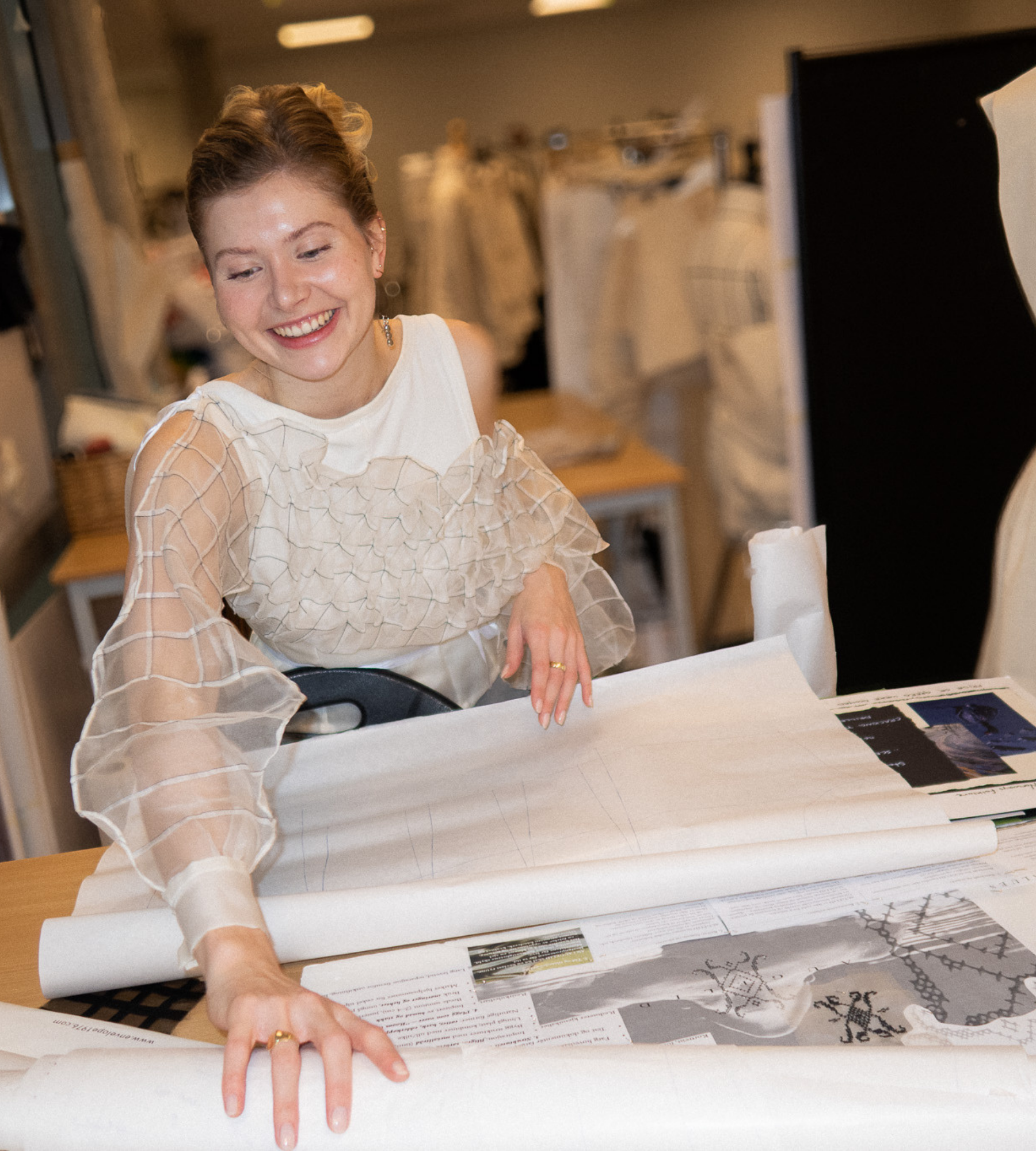
Felicia (26) jumps straight in.
She describes herself as extremely passionate. When something catches her interest, she’s all in. Her path has been anything but linear, but certain things have always stayed constant: creativity, curiosity, and a relentless drive to go deep, no matter the field.
“I lead with my heart first,” she says. “I feel a lot, both the good and the bad, but I’m also very curious and eager to learn. I like understanding things in depth.”
She’s unapologetically a dreamer. A positive, slightly delusional kind of dreamer, as she calls it. Once she’s decided on something, it takes a lot to knock her off course. She grew up believing that most things are possible if you put in enough work and enough heart, and she has little patience for what she calls “negative people disguised as realists.”
“Sorry not sorry,” she adds.
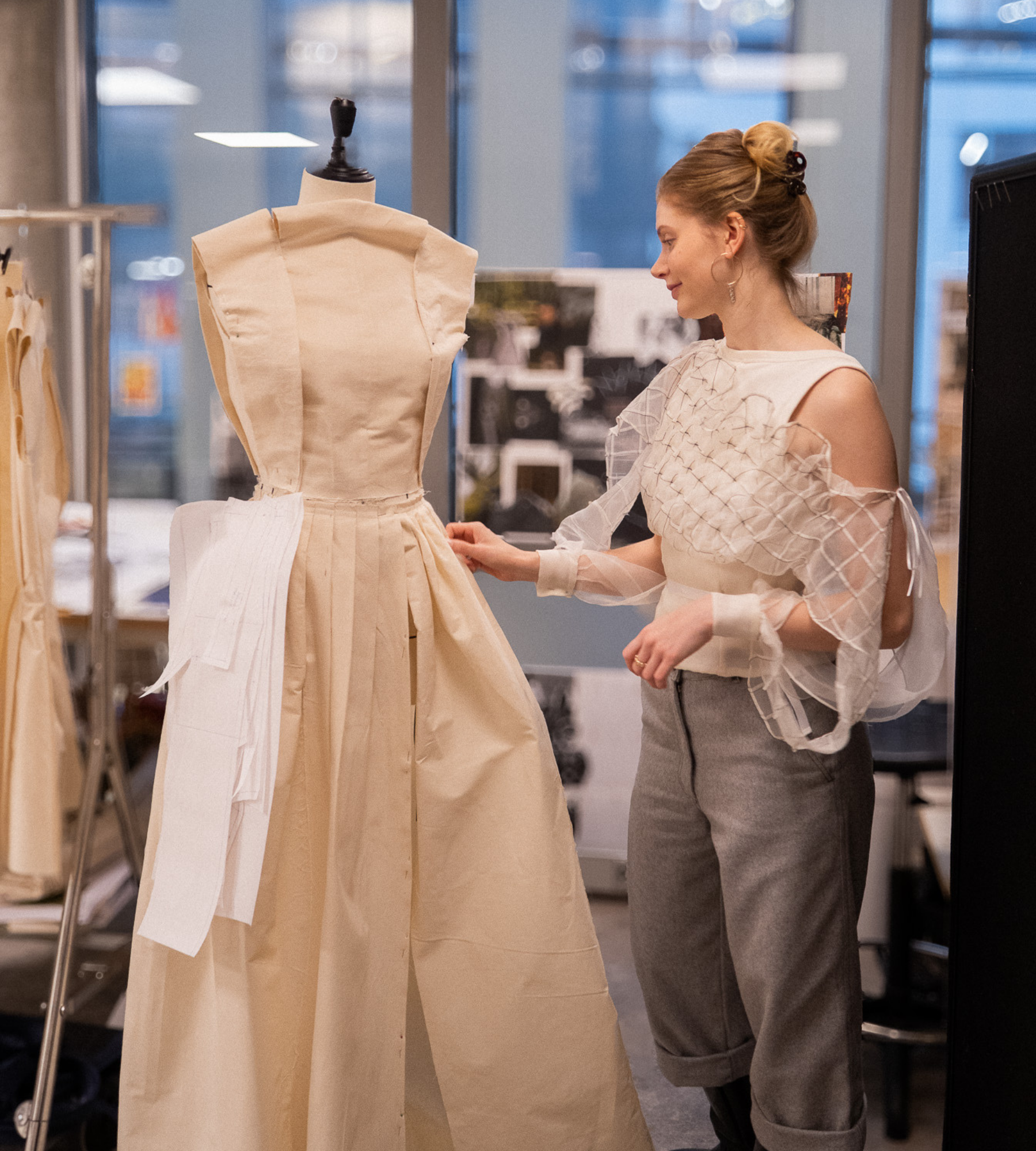
Let’s talk passion
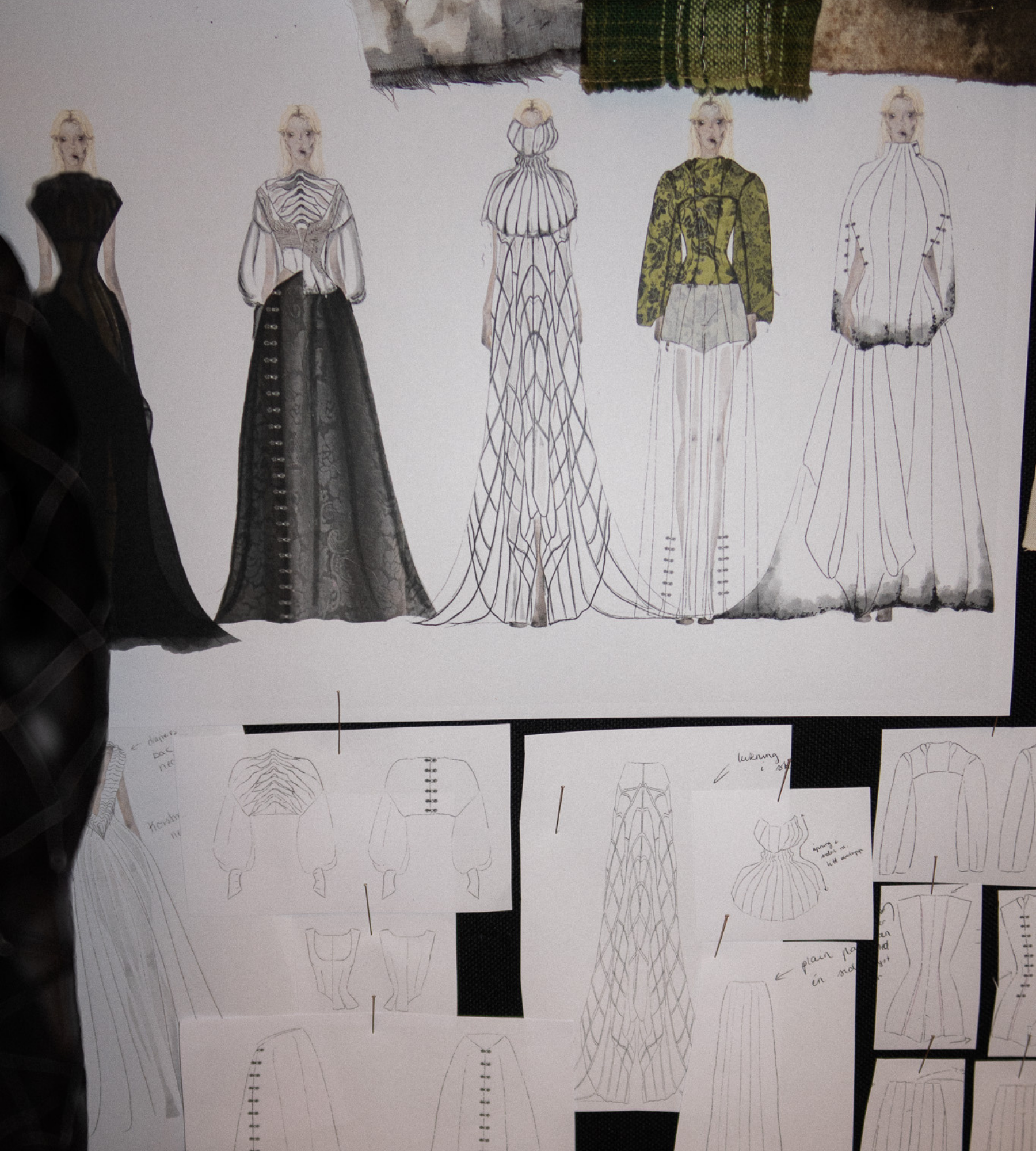
When Felicia burns for something, it’s intense. Sometimes so intense it feels like it’s spilling over. Right now, that energy is poured almost entirely into her brand AUGELID and her graduation collection GREED, set to be shown in June.
Nature has always been a grounding force for her. When she’s not in Oslo, she spends time in the forest wandering, dreaming, longing, and finding inspiration. Raised on the outskirts of the city, with family ties to more rural areas, she naturally inhabits the space between worlds: nature and industry, roots and modernity.
That intersection is central to what she wants to create with AUGELID.
Her current driving force is sustainability within the fashion industry, a response to the dramatic rise in natural disasters over the past decade, and the sense that things aren’t slowing down.
“GREED is my protest against human greed and overconsumption,” she explains, “disguised as a dark fairytale.”
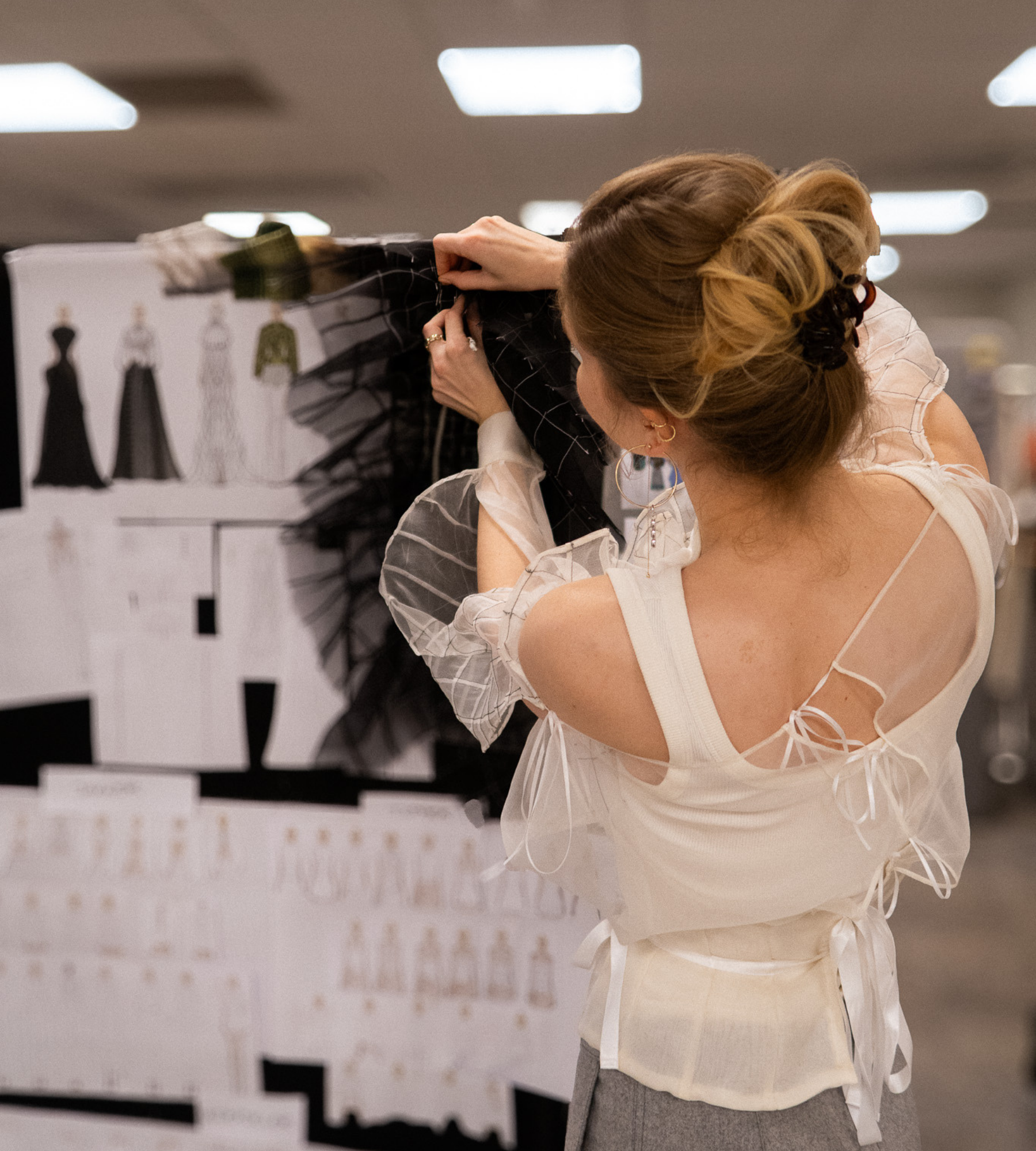
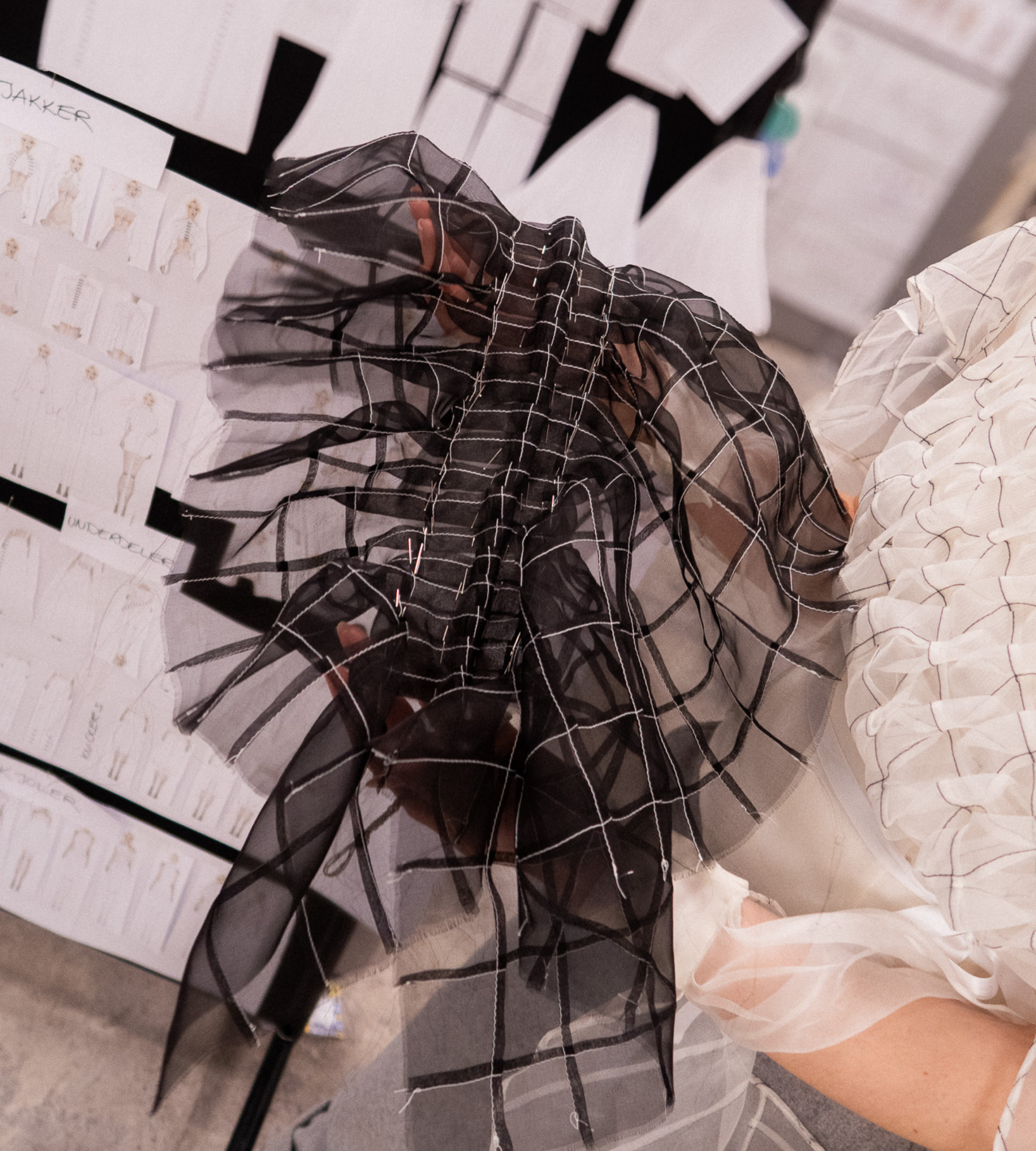
The collection draws from oil spills, forest fires, deforestation, and global warming. She’s using these realities to illustrate how both nature and cultural heritage are slowly disappearing, piece by piece, because of human greed.
Felicia’s answer to the trend-driven fast fashion industry, defined by overproduction and plastic-based materials, is to look backward. To revive traditional, sustainable values and methods, where garments were created with care, knowledge, time, and precision.
Your unexpected side
Many people are surprised to learn that Felicia was deeply involved in theatre for years. Before high school, she stood at a very real crossroads: should she pursue theatre seriously, or choose a more traditional route?
She chose the traditional path, but never fully let go. She joined school theatre and landed the lead role in her second year.
“At that time, theatre became my entire identity, much like fashion design is today,” she says playfully.
Theatre gave her confidence - especially socially - and forced her out of shyness and comfort zones. And even though she eventually set it aside as a career path, it lives on in her work now: in storytelling, character, movement, expression and the courage to take up space.
People are often surprised because theatre, like fashion, is all-consuming. For those who know her primarily through design, it can be hard to imagine another version of her that was just as intense.
She doesn’t plan to return to theatre professionally, but she’s always open to a little improvisation, movement, or theatricality in everyday life.
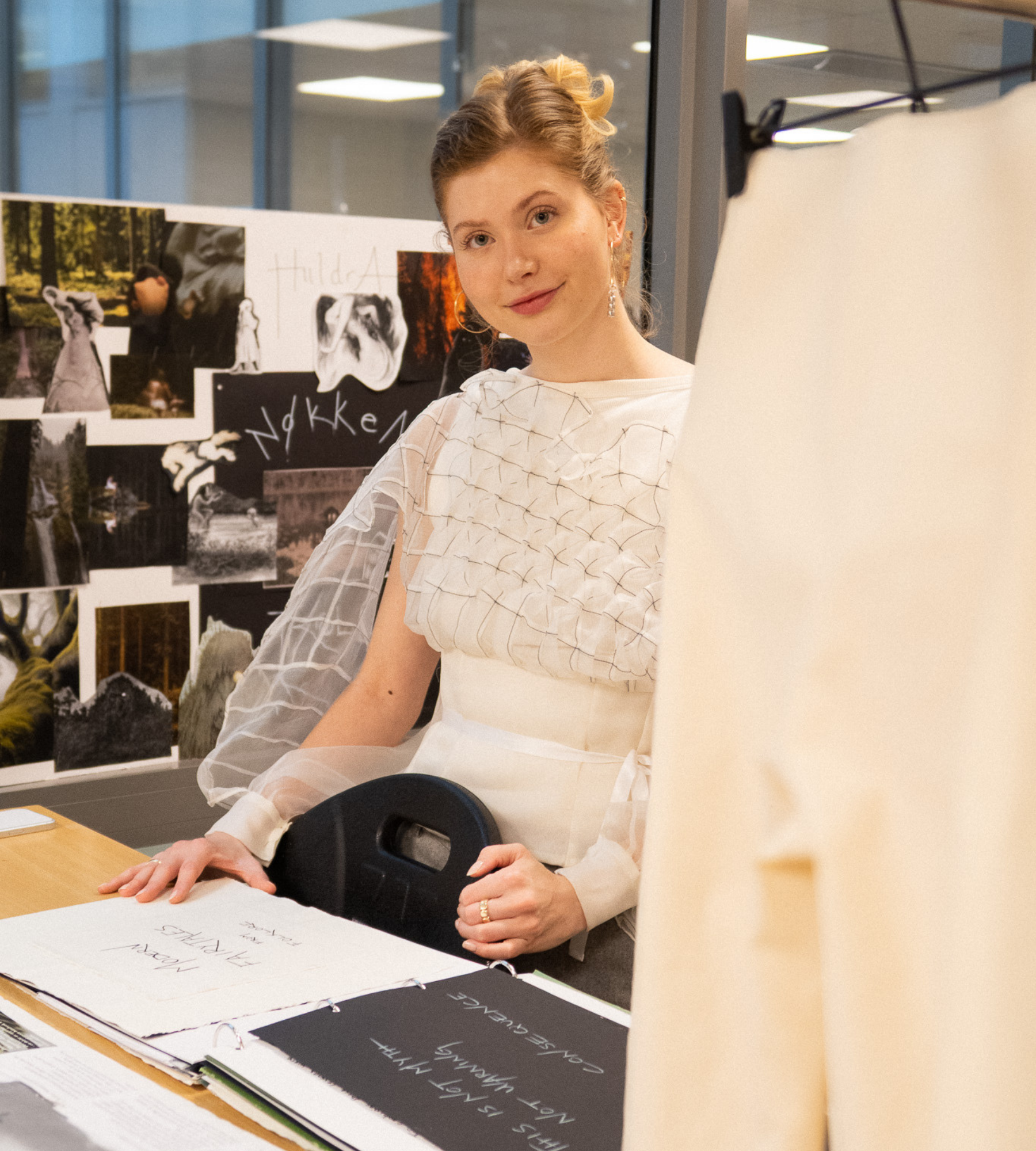
Someone who inspires her
Felicia’s greatest inspirations are the women from the oldest generation in her life, her grandmothers.
Growing up, neither of them were particularly good at showing off their work. It wasn’t until adulthood that Felicia truly understood how much creativity, craftsmanship, and drive lived in her family.
Her grandmother, a teacher, did something few women dared to at the time: with three children, she enrolled in a creative school in Gothenburg to study design, pattern making, sewing, and textile craftsmanship. She has binder after binder filled with work and knowledge built over a lifetime, intensely detail-oriented and perfectionistic in a way Felicia both admires and recognizes in herself.
Her other grandmother started her own dry-cleaning business, which ran successfully for many years before she sold it. A deeply impressive and unconventional achievement for that time. She’s also a rosemaler, creating works that still leave Felicia speechless. She sews, embroiders, knits, and crochets at a level Felicia can only dream of.
Felicia’s first sewing machine was, in fact, her grandmother’s first sewing machine. And her upcoming collection will feature some of her grandmother’s knitted accessories.
Knowing that so much craftsmanship, patience, and creative joy runs through her family gives her work deeper meaning and a powerful drive to carry it forward, in her own way.
Just for fun
If there’s one thing Felicia would be terrible at, it’s laboratory work — something she’s already tested.
During her biology studies, the endless lab sessions, strict rules, and weekly reports quickly drained her. Writing a 16-page report every single week burned her out in just three months. When her computer crashed before saving a finished report, that was the final sign.
She packed her bags and returned to Oslo.
Probably for the best, she says. Had she stayed much longer, she likely would’ve burned down more than just her interest in biology.
RETURN TO NEWS

Meet Emma: The sourdough baker
Some people are drawn to complexity. Others find their magic in simplicity, and then commit to doing it exceptionally well. Emma Fjordside Kristensen (31) belongs firmly to the latter. Originally f...
Read more
Meet Marthe: The community builder
Some people are natural connectors. Not in a loud or performative way, but in the way they move through a room, quietly making others feel included, seen, and part of something bigger. Marthe de Gr...
Read more

